
Your Guide to Wearing and Caring for Your Night Guard (Protective Splint)

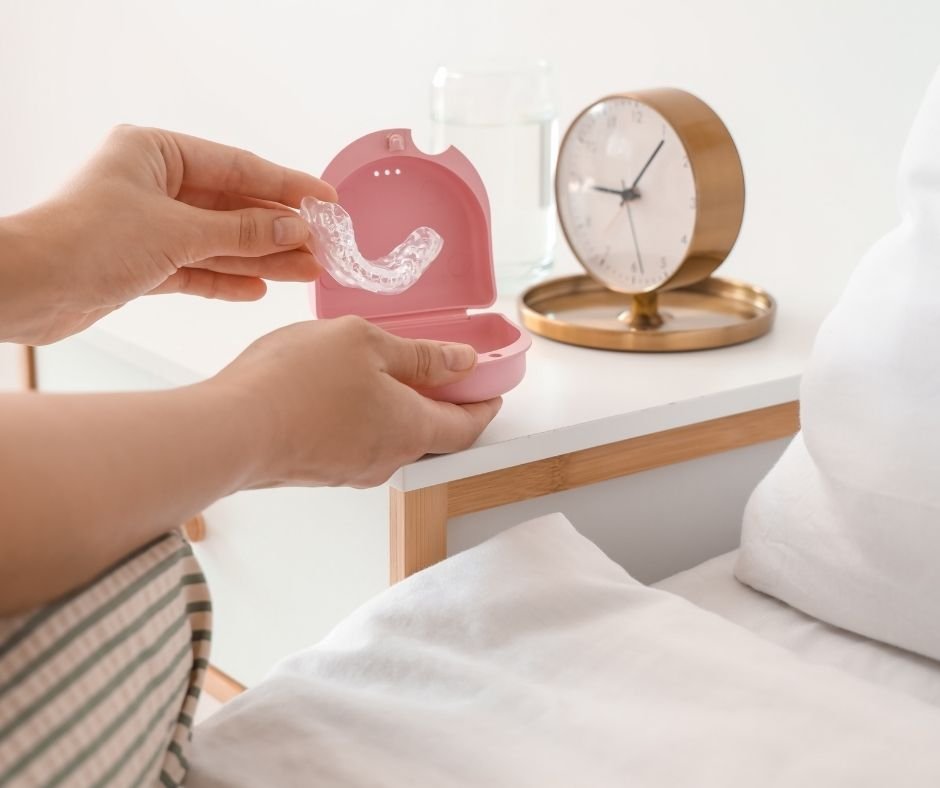
A night guard (occlusal splint) helps protect your teeth from grinding (bruxism) while you sleep. Using and caring for it properly will keep it comfortable and effective.
1. How to Use
Place the night guard over your teeth
Gently press into place with your fingers
Do not bite down to seat it
After removal → your bite should feel normal
2. What to Expect
In the first few days, you may notice:
Mild pressure or tightness
Slight discomfort while sleeping
Increased saliva
These usually improve as you get used to it
❗ If you feel significant pain → stop using and contact your dentist
3. Cleaning
Clean every morning
Use a toothbrush + toothpaste
Clean all surfaces, especially inner areas
⚠️ Handle carefully to avoid dropping
4. Storage & Travel
Store in a closed container with clean water
Avoid very hot or very cold temperatures
Change water daily
When traveling:
Wrap in moist tissue or cotton
Avoid heat (e.g. inside a car)
5. Wearing Routine
Wear your night guard regularly as advised
Avoid long breaks, as it may affect the fit
6. Follow-up Care
Over time, the surface may wear from grinding
Regular check-ups help maintain proper fit and function
💬 Need Advice?
If symptoms do not improve (e.g. jaw pain, temple pain, or poor sleep), a bite and jaw evaluation may help identify the cause.
At Bigmouthten, our dental team provides personalized care for each patient. You are welcome to learn more about our treatments and team before your visit.
Contact Us
Phone / WhatsApp: (+66) 87 649 0110
LINE Official Account: @bigmouthten